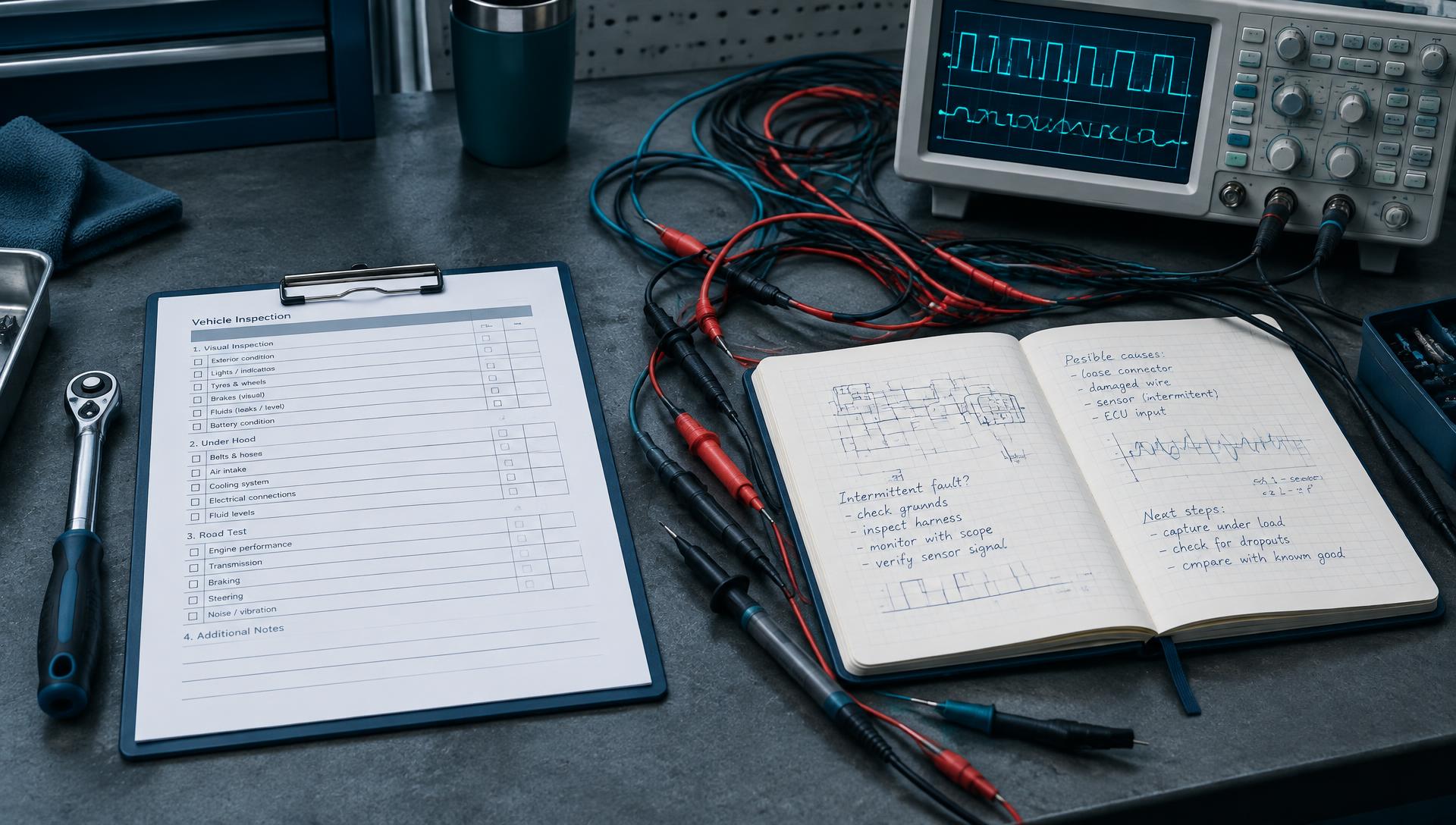

Editorial illustration
Knowing is not doing
A multiple-choice test shows that a technician recognises the right answer. It does not show whether they can isolate a high-voltage system safely, read a live signal on an oscilloscope or explain a repair to a customer.
Start from the task
Describe the work first: the task, its complexity and the required level. Only then decide what an assessor needs to see. This keeps assessment close to the workshop instead of the classroom.
Use skill measuring points
Break each task into observable measuring points. Each point links to one or more skills, so a single practical activity produces evidence on several skills at once.
Assess without stopping the workshop
Short practical activities during normal work, assessor checklists on a tablet and, in pilot, recorded evidence reduce the time technicians spend away from customer vehicles.
Keep the evidence honest
Report what was observed, what is inferred from other data and what is simply unknown. That distinction is what makes the results usable for decisions.